Which Hand to Read: Left or Right?
The traditions give different answers, and the honest one is more useful than any single rule. Palmistry is a tradition, not a validated science: what follows is what the traditions say, read as a mirror, never a verdict.
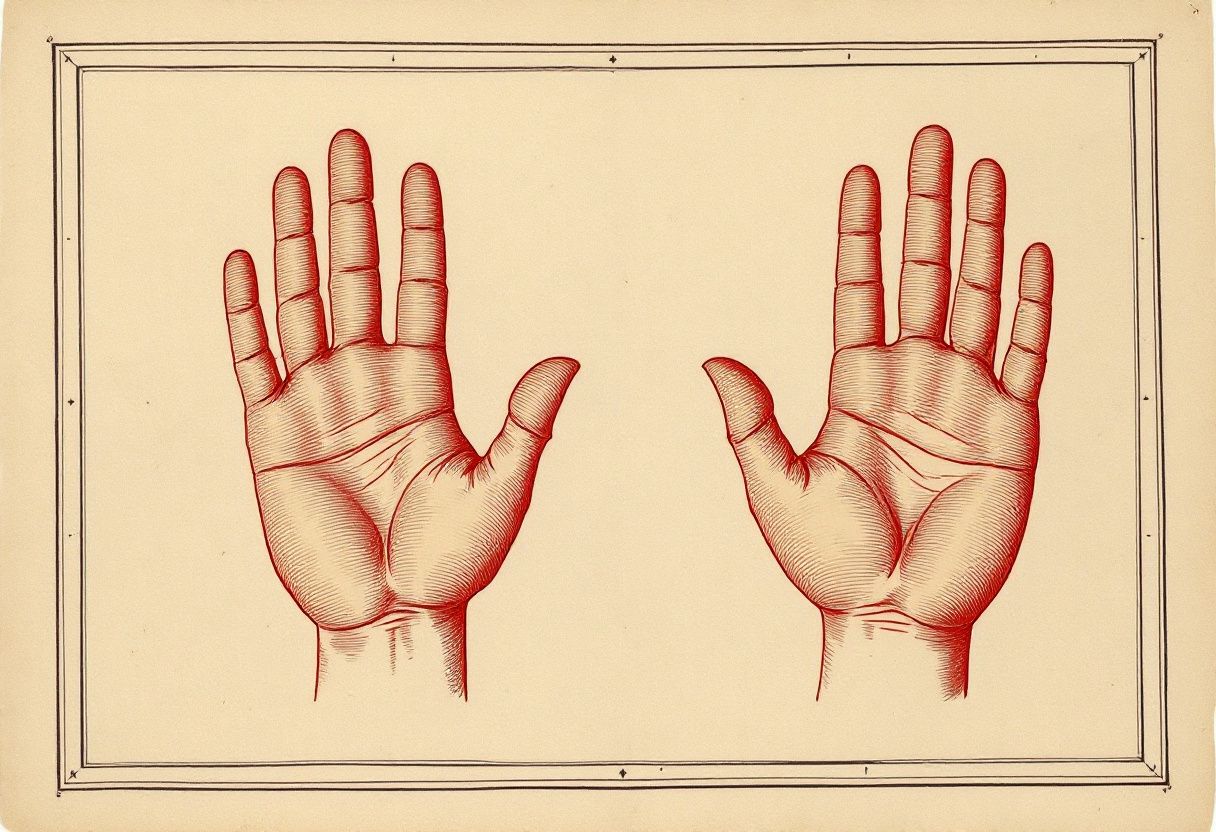
The short answer
Read your dominant hand: the one you write with. Across the traditions, the most durable idea is that one hand carries what you started with and the other carries what you are making of it. The dominant hand is the acting hand, so it holds the more current record. That is the hand Hasta asks for.
If you want the full picture, both hands read together is the richer reading, and we will come back to that. But if only one palm is going to be read, the dominant one is the right pick, and here is why the old rules point there once you read them honestly.
Three traditions, three answers
Chinese practice most often says: left is innate, right is acquired. The left hand shows the endowment, the right shows what living has made of it, and some teachers weight the acquired hand very heavily, treating the innate hand as background. Two other variants circulate. One switches which hand matters around age thirty. The other assigns hands by gender, left for men and right for women, a rule with openly patriarchal roots that modern readers have largely dropped.
Indian practice carried a similar gendered convention: right hand for men, left for women. But the rule was already giving way inside the classical sources themselves. Sen, the standard English voice of hasta samudrika, conceded that a woman with her own career reads from the right hand, and that left handed people read from the left. In other words, even the tradition's own writers were quietly moving from gender to what the person actually does.
Western practice, in Benham's 1900 system, refuses to choose at all. Read both hands, always: the passive hand is the index to the natural being, the one you were born with, and the active hand shows what has been done with it, reversed for left handed people. He went further: failures in palmistry, he wrote, come from reading a single hand.
Why handedness, not gender
Look at the three answers together and they converge on one idea. The Chinese innate and acquired pair, the Indian exceptions for career and for left handers, and Benham's passive and active pair all describe the same split: one hand is the inheritance, the other is the work in progress. The only real disagreement is how to pick the acting hand, and gender was always a bad proxy for that. Handedness is the honest one. Your dominant hand is the hand that acts: it writes, builds, greets and carries. So Hasta's rule is simple and the same for everyone: the non dominant hand is what you brought, the dominant hand is what you are building. No gendered hand rules, for anyone.
There is a second reason the acting hand matters most. Both the Western and the Indian traditions hold that the lines are not fixed. Benham taught that lines change as life leaves profound impressions on the mind. The Samudrika texts say the same thing in their own register: the lines form by karma and shift with present action. If the tradition itself says the map moves, then the hand doing the living is the living document, and that is the one to read first.
Prarabdha and Agami: the two hand arc
The Samudrika frame gives this split its most beautiful names. The non dominant hand is read as Prarabdha: the endowment, what was set in motion before you had a say. The dominant hand is read as Agami: what you are building now, the record still being written. Comparing them is the real pleasure of a two hand reading: a head line that slopes further on the dominant hand, a mount that has come forward, a mark on one palm and not the other.
Done honestly, that comparison is qualitative. The two hands are set side by side, feature by feature, and the differences are named and read. Nobody scores one hand against the other, and no honest reader will tell you your hands disagree by some percentage. If you want this comparison, Hasta's two hand reading reads both palms and writes the arc between them.
What Hasta asks for
One clear photo of your dominant palm, fingers open. The reading is written only from what is visible in that photo, and every claim in it is anchored to a feature the reading names, so you can hold your own hand up and check. If a line is faint, the reading says so and hedges. If a feature cannot be seen, the reading does not pretend it was. The photo is deleted once the reading is written.
If you are left handed, nothing changes except the hand: your left is your dominant hand, so that is the one to photograph. The old rules that sorted hands by gender play no part here.
Questions people ask
Which hand do palm readers read, left or right?
It depends on the tradition, but the most widely shared modern rule is this: the non dominant hand shows what you were born with, and the dominant hand shows what you are building. Hasta reads the dominant hand, the one you write with, because it carries the more current record.
Is the left hand for women and the right for men?
That rule exists in older Indian and Chinese practice, but it was already crumbling in the classical sources themselves, which made exceptions for women with their own careers and for left handed people. Hasta does not use gender to pick a hand. Handedness decides, for everyone.
What does the non dominant hand show?
Tradition holds that it is the quieter record: the temperament and endowment you arrived with. The Samudrika frame calls this Prarabdha, what was given. Benham called the passive hand the index to the natural being. The dominant hand then shows what you have done with it.
Do the lines on your palm change over time?
Tradition on both sides says yes. Benham taught that lines change with profound impressions on the mind, and the Samudrika texts say the lines form by karma and shift with present action. That is one reason the dominant hand, the acting hand, is read as the living document.
Should both hands be read together?
If you can, yes. Benham wrote that failures in palmistry come from reading a single hand, because one hand without the other is half the story. The comparison is qualitative: the two hands are set side by side, feature by feature, never scored against each other.
See it on your own hand
Hasta reads a photo of your palm and writes a reading from the lines it can actually see, anchored to features it names, so you can check every claim against your own hand. The photo is deleted after the reading.
Read next
Palmistry is a symbolic tradition, not a validated science. Hasta reads character and tendency, never health, lifespan or dated events. A mirror, not a verdict.